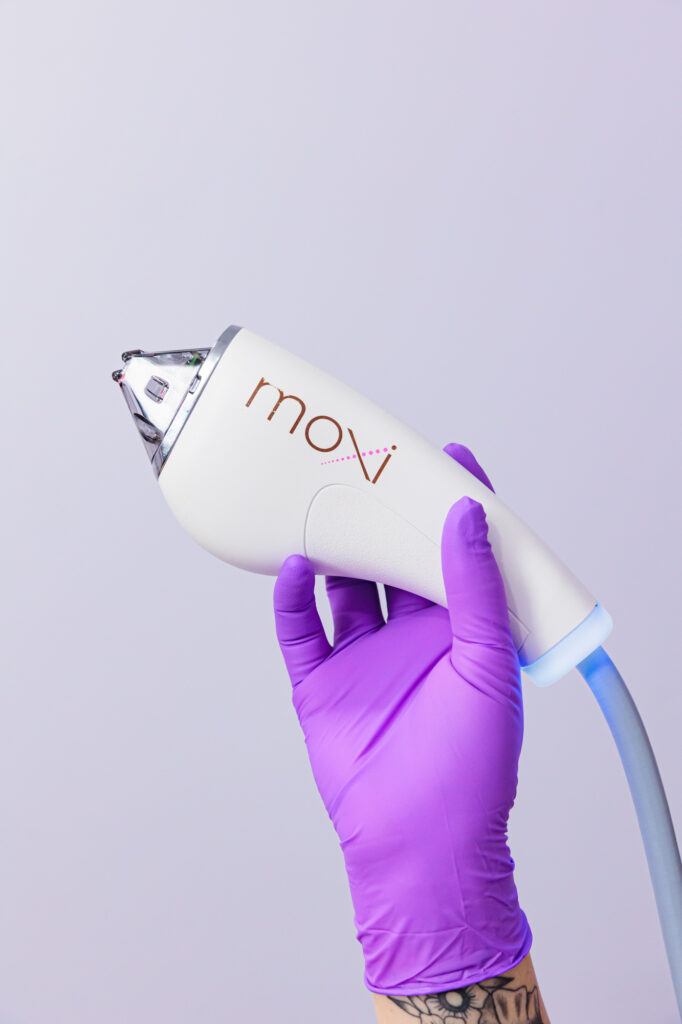


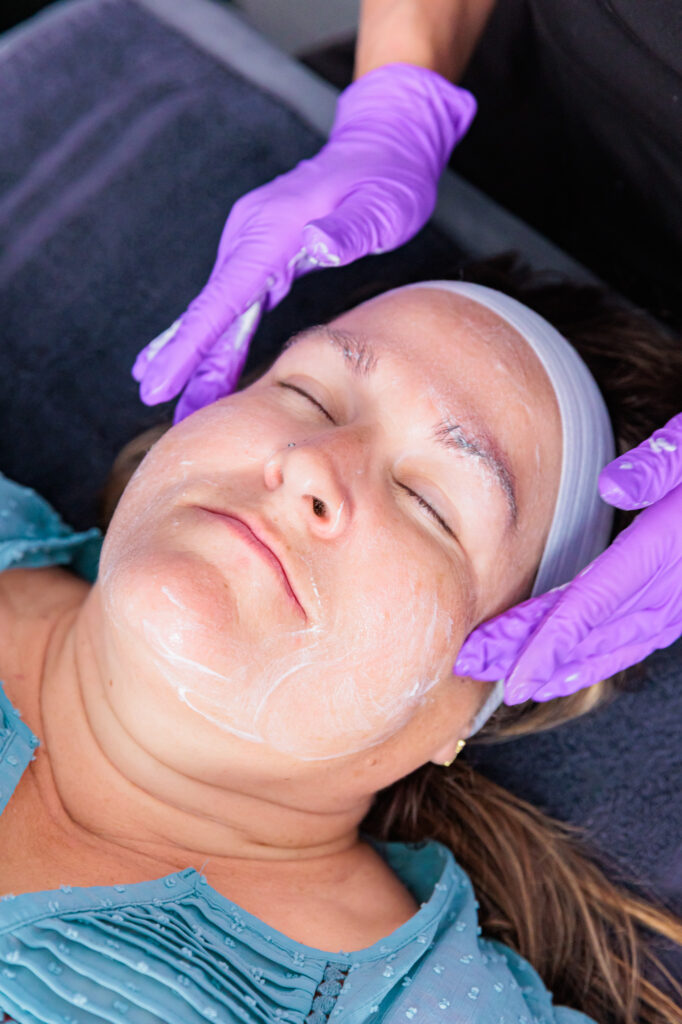
A standard analysis is visual and hands-on. Your esthetician looks closely, feels your skin, and gives you an informed read. Aura adds measurement to that, using specialized filters and lighting to detect conditions in deeper layers than the eye can pick up, then scoring them numerically. The two work well together. One tells you how your skin feels and behaves, the other tells you what it’s doing.
-
Performed By:
Registered Nurse or Certified Laser Technician
-
Sessions Needed:
As needed
-
Downtime:
None
-
Duration of Results:
N/A
Why We Measure First
Most people choose an aesthetic treatment the same way. You notice something in a photo, you remember what worked for a friend, you book the thing that sounds closest. Then you spend real money hoping you guessed right.
We’d rather you didn’t have to guess.
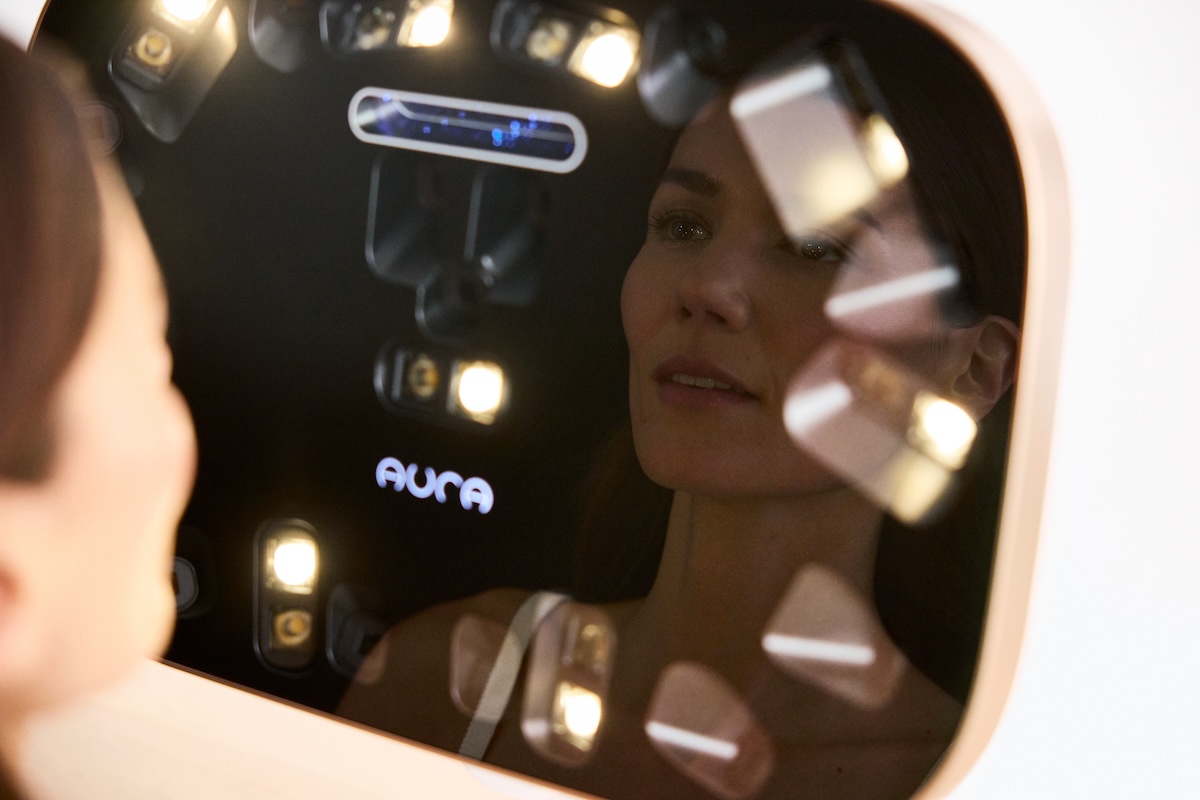
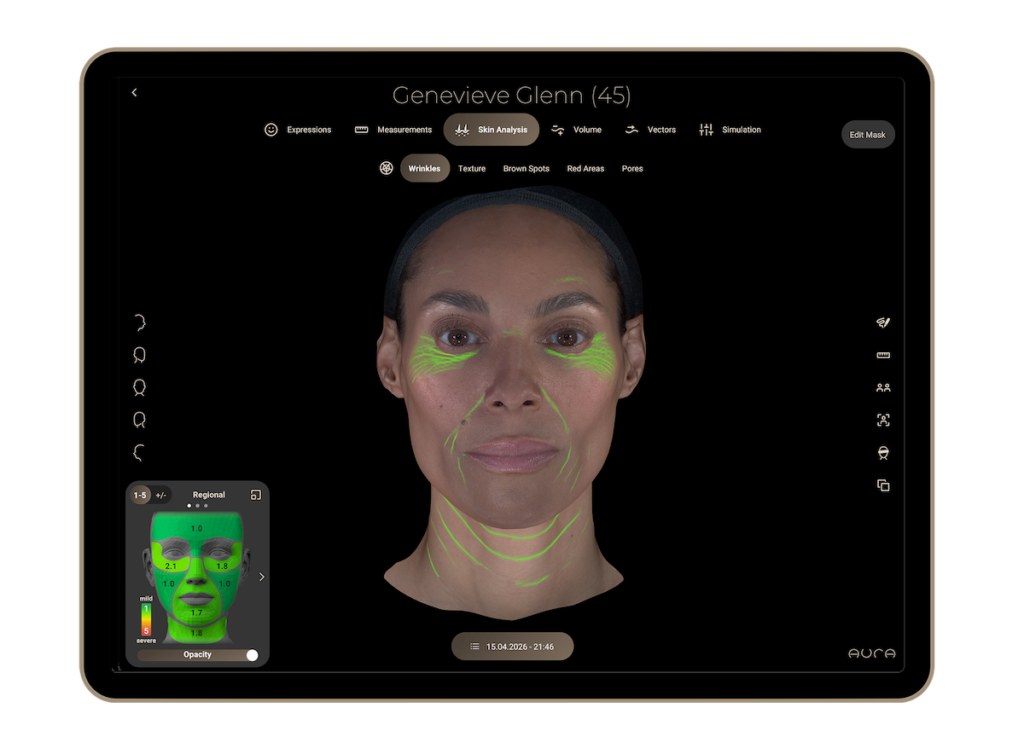
Aura imaging turns your skin into data before anyone recommends anything. It grades individual regions of your face and neck on a five-point scale and color-codes the results, so healthy areas read green and areas asking for attention shade warmer. Your forehead gets its own grade. So does your neck. Instead of one vague verdict about your skin, you get a map.
Sometimes that map tells you to do less than you planned. We’re fine with that. A recommendation you can see the reasoning behind is worth more to us than a booking you weren’t sure about.

What the Scan Measures
Skin analysis in Portage, MI covers five categories, each measured rather than estimated.
- Pigmentation. Aura reads melanin concentration in the epidermis, which means it registers sun exposure that hasn’t darkened into a visible spot yet. This is usually the section that surprises people.
- Texture and lines. Depth and distribution of wrinkles and creases, mapped by region instead of averaged across your whole face.
- Pores and oil. Size, density, and oil load, zone by zone, which is why one person’s cheeks and T-zone can require completely different products.
- Redness. Circulatory patterns tied to rosacea, irritation, and inflammation, including flushing that comes and goes.
- Structure. Proportion, angle, and volume in three dimensions. Volume loss shows up here years before it registers as “looking tired.”
Your Appointment, Start to Finish
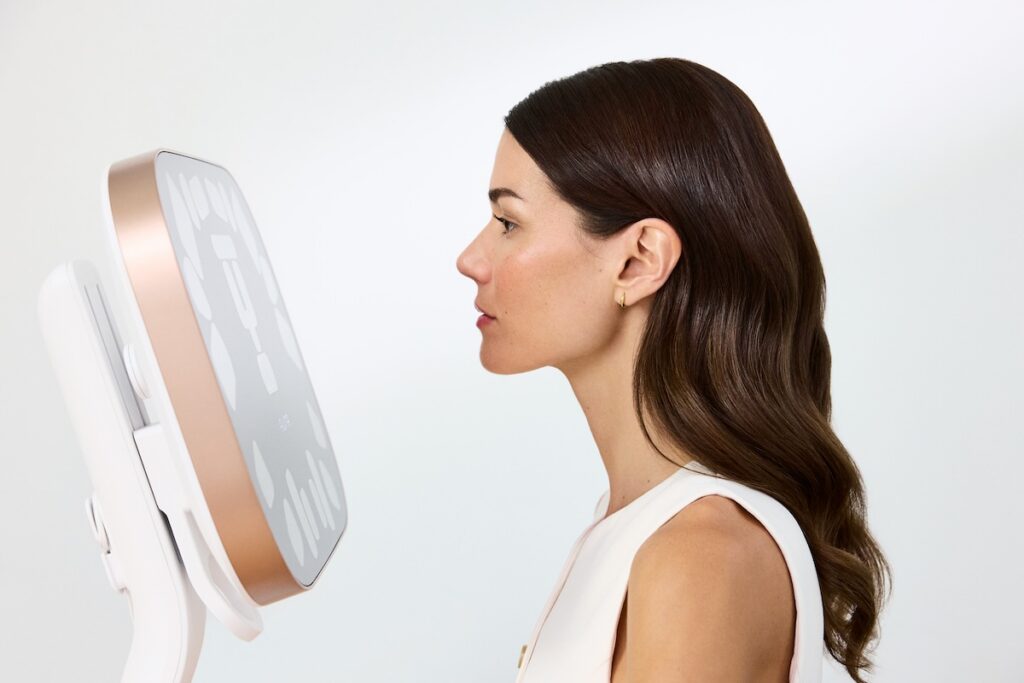
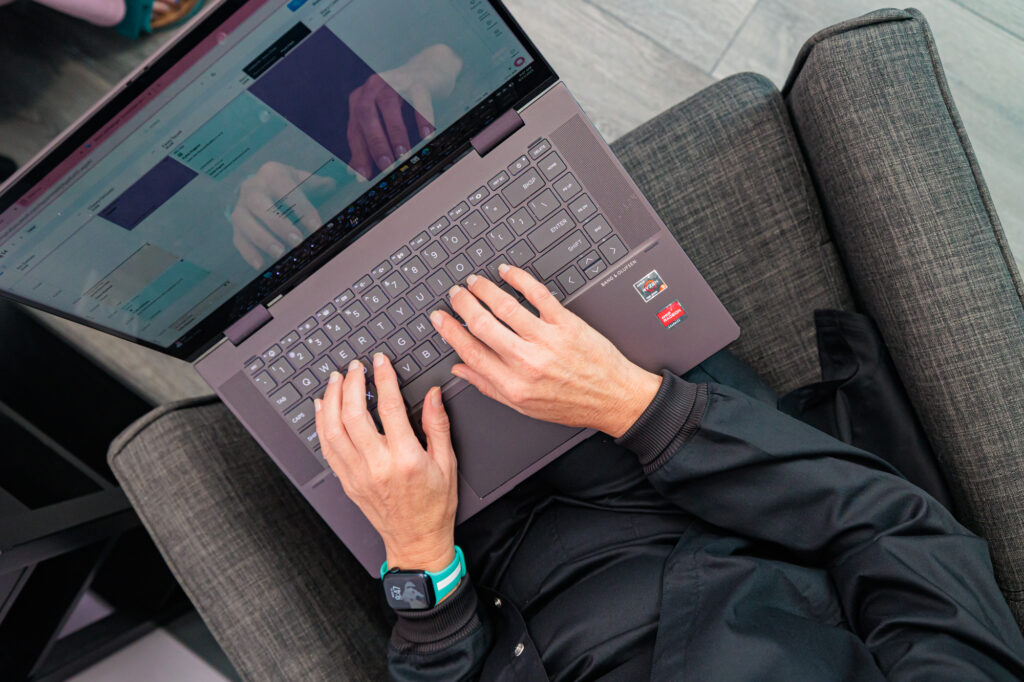
Check-in is quick and there’s no prep in the treatment room. You sit, the system captures, and it’s finished before you’ve settled in. No contact, no UV light, nothing to feel.
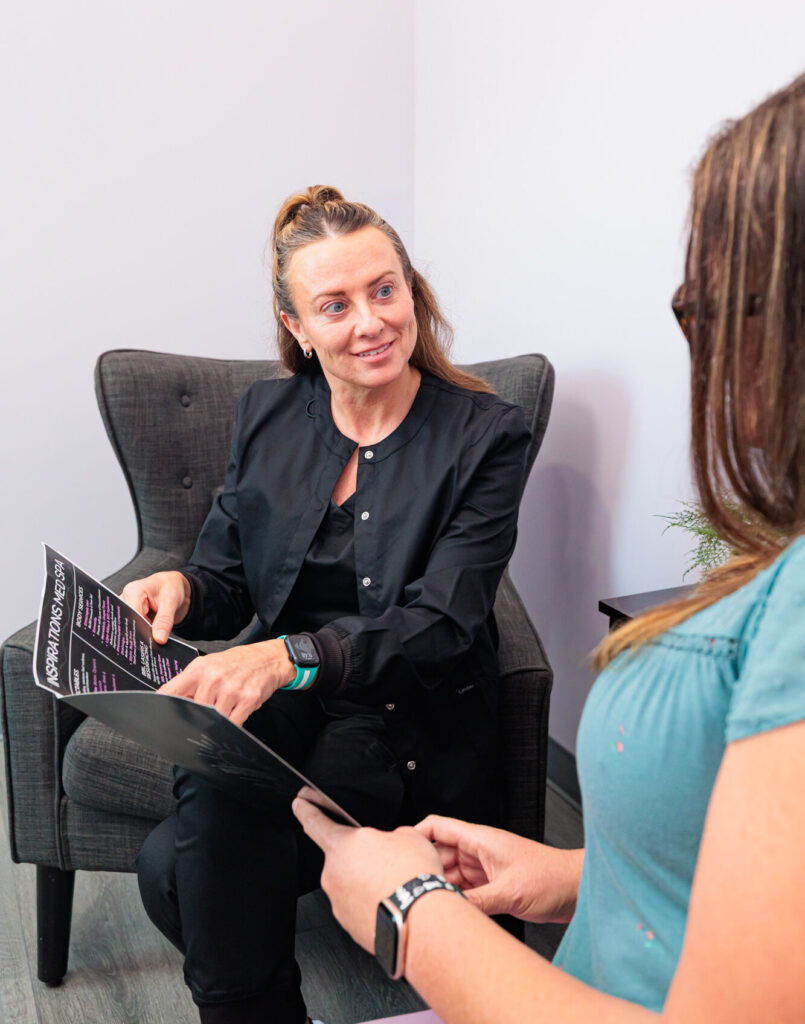
The rest of the appointment is the actual point. Your provider pulls up your scan and rotates through it with you, region by region, translating what each score means in plain terms. You’ll see the areas you came in worried about and, usually, one or two you had no idea about.
From there you build a plan together, in sequence. Some things need to happen before others, and the scan makes that order obvious instead of arbitrary. You go home with a written report and a baseline. At your next scan, the comparison is numerical, so progress is something you can verify rather than something you have to squint at.
How to Prepare for Your Consultation
-
Come with a bare face if your schedule allows, or plan a few minutes to cleanse when you arrive.
-
Clip or tie hair completely off your forehead, cheeks, and jawline.
-
Stay hydrated in the days beforehand. Dehydrated skin scores differently.
-
Bring your questions written down. People forget them once the scan is on screen.
-
Have a rough sense of your budget and timeline so the plan we build is one you'll actually follow.
-
Makeup, tinted SPF, and heavy moisturizer on the day of your appointment.
-
Peels, facials, and manual exfoliation for about a week prior.
-
Sun and tanning beds in the days leading up, which skew pigmentation readings.
-
Retinoids the night before, if your skin runs sensitive.
Take the Next Step


Inspirations is your starting point for real enhancement.
Common Services After a Body Scan
Frequently Asked Questions
Yes. Aura combines specific lighting, camera technology, and filters calibrated to detect concerns across skin types, rather than relying on contrast the way older imaging does. Melanin-rich skin has different needs and different risk patterns, and measured data is far more useful than a visual guess in that context.
Aura can generate outcome simulations across areas like the cheeks, temples, under-eye, chin, and jawline, so you can compare a few approaches side by side before deciding anything. Ask your provider whether simulation makes sense for what you’re considering.
Especially then. Your scan captures where you are now, including how previous work is aging, where filler has migrated or settled, and what’s changed structurally since. That baseline makes every decision after it more precise, and it gives you a fair comparison point for whatever comes next.
Your scan is part of your medical record and is stored securely with the rest of your chart. We use it to plan your care and to compare against future scans. It isn’t shared or published anywhere without your written permission.
Your report points toward the treatments that address what the scan actually found, in the order that makes sense. Texture and pigmentation usually route toward resurfacing, structural volume loss toward dermal fillers or Sculptra, and expression lines toward BOTOX®. Sometimes the answer is a skincare change and a follow-up scan in six months. You can talk through the full picture during your consultation.